

Meet Department of English Chair Lee Konstantinou
July 23, 2026
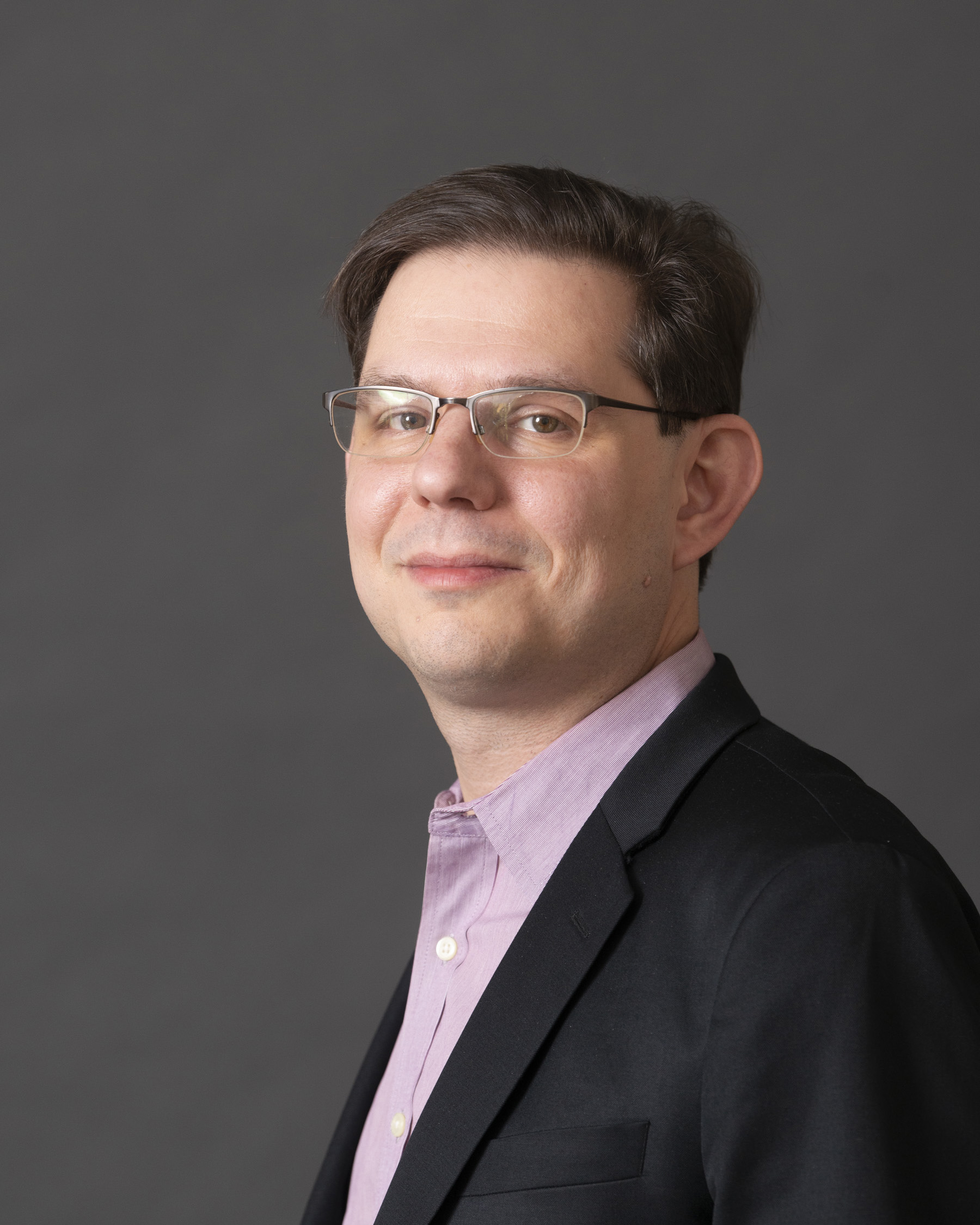
Newly appointed chair is excited to continue building community
By Chelsea McLin M.A. ’19
Lee Konstantinou begins his tenure as chair of the Department of English this fall, succeeding Amanda Bailey after a decade of leadership and service.
A member of the faculty since 2012, Konstantinou’s research and teaching focus on 20th- and 21st-century U.S. literature and culture, postmodernist art and theory, media studies, as well as literary and cultural sociology.
He has also written fiction, including a novel called “Pop Apocalypse: A Possible Satire,” published in 2009. More recently, his scholarship has explored comics, and he’s taught courses on science fiction, young adult literature and contemporary American fiction. His co-edited collection, “Artful Breakdowns: The Comics of Art Spiegelman” published in 2023, won the Comics Studies Society's Edited Book Prize.
For the past two years, he has served as director of undergraduate studies.
In an interview, he shared his goals for the department, the future of English studies, AI’s role in the classroom and why building community is one of his top priorities.
Your work spans fiction, comics scholarship and literary criticism. What connects those interests, and how have they shaped your approach to leading the department?
Everything I do is connected. My scholarship has shaped my fiction. My creative writing has informed the scholarly questions I ask. I enjoy connecting literature and other media forms. At different times, I've been as invested in comics, film, television, video games, and other forms of popular culture as I've been in literature.
One reason I'm excited to be chair is because I like thinking about how institutions work—understanding how individual members of faculty and staff fit into a larger shared mission and story. I believe in faculty governance, and I think it's important that when decisions are being made that affect the department, people from the department are the ones to advocate on our behalf.
What do you enjoy most about the English Department?
The people. We have an incredibly broad and intellectually diverse faculty doing fascinating work across many different fields.
One thing I'd like to see is more opportunities for people to connect. Before COVID, there were more spontaneous conversations in the hallways and more chances to learn about each other's research. I'd love to help rebuild that sense of community.
What first drew you to English, and how did comics become a focus of your scholarship?
I read a lot of comics growing up. As an undergraduate, I got interested in modernist and postmodernist literature. I was especially interested in big "systems" novels like “Ulysses” and “Gravity's Rainbow.” I worked with an advisor who specialized in modernism who had written on Holocaust literature—including Art Spiegelman's Maus. I took the opportunity to combine my interests and wrote about Maus for my senior thesis, which in many ways planted the seed of my current research. I’m working on a book about the rise of an idea of creator-ownership in the world of periodical comics in the 1980s and 1990s.
What are your top priorities as chair?
I want us to bring in new faculty, strengthen our ranks of assistant professors and build on areas where we've historically been strong, especially African American and African diaspora literature. I want to think about how we can continue to strengthen those fields.
Another major area is artificial intelligence and technology. As director of undergraduate studies, I've seen a huge increase over the last year in faculty reaching out to determine how to address AI-generated work in the classroom. The technology has improved quickly, and students are using it more frequently, sometimes in ways that create problems.
Like everyone says, there's both opportunity and risk. What interests me is figuring out what we're going to do about it. We already have faculty doing exciting research in this area. I'm interested in how AI impacts writing, what that means for teaching and research, and what kinds of decisions universities will need to make.
What is your vision for the future of the department?
I'd love to see us grow the major and continue showing students the many opportunities an English degree provides.
More than anything, I want faculty, staff and students to feel connected and invested in one another. I think this is a great department, and our students are terrific. A lot is already going well. My goal is to continue that.