

Sydney Irene Sharpstene
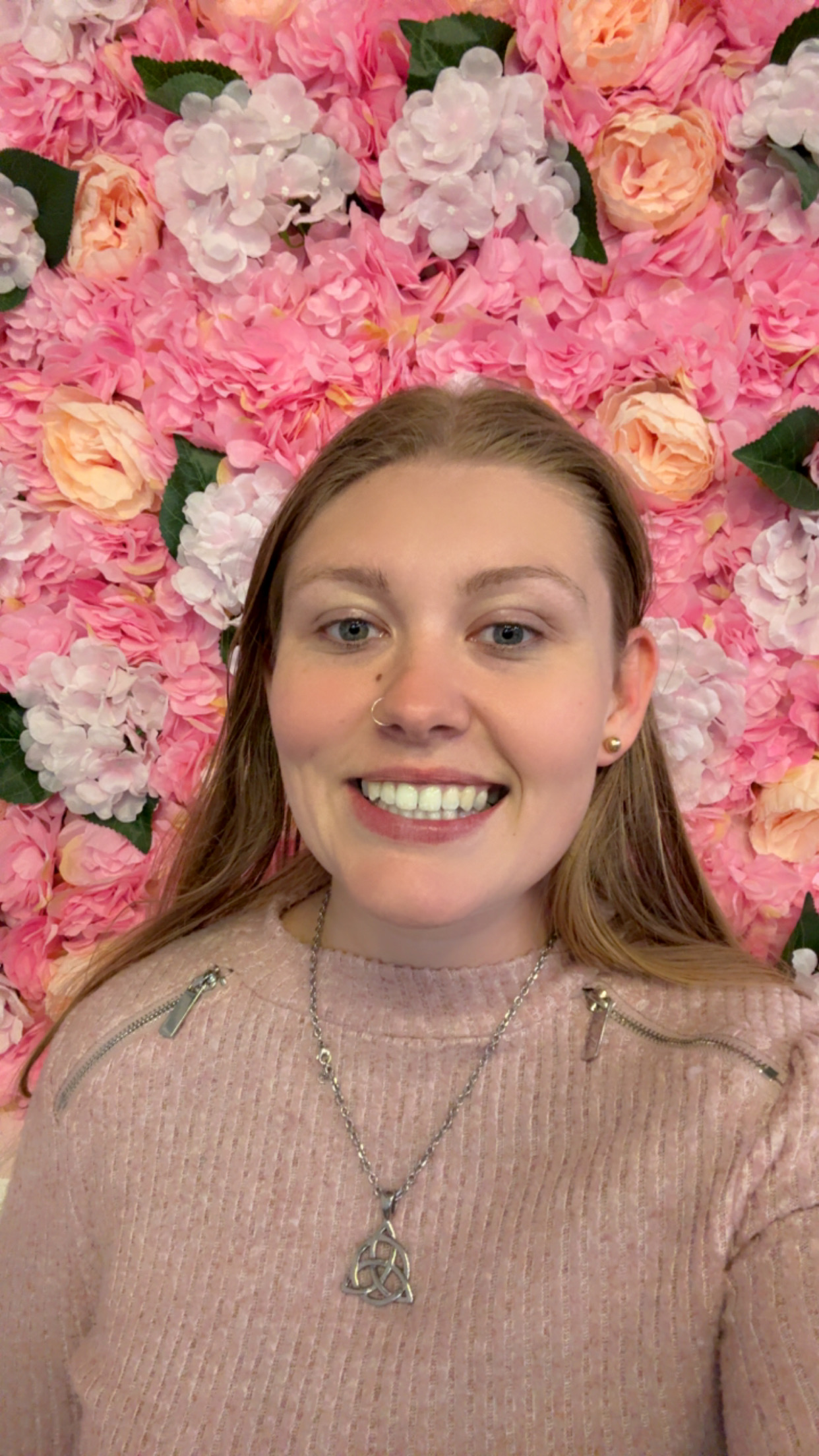
Lecturer, English
Conferences, Workshops, and Talks
Abstracts Refereed Posters
(2025) - TerrapinSTRONG - “Showing Students Understanding- Helping Students
Navigate University Life”Organized and carried out a session on how to assist students in the transition to
college and beyond, focusing on research and real interviews with students on
what they find the hardest to adjust toas well as where there are gaps in on-
campus resources and using my own success to show how we can best
advocate and facilitate improvements for students.
Workshops
(2026, August) - AWP Fall Training - “Approaching A Literacy Narrative”
Co-taught a workshop on how to teach and incorporate the English
department’s newest English 101 requirement paper following our piloting
of the new assignment for the English 101 curriculum the previous
semester.
(2025, January) - AWP Spring Training -“Incorporating TA’s into the Classroom”
Explanation- Co-Led workshop imparting my personal experience with TA’s and
how to best prepare them for their expectations and incorporate them into the
classroom early and often using a TA incorporation guide of my creation.
(2024, August) - AWP Fall Training- “Incorporating AI into the Classroom”
Co-Led a session on how to make AI policies crystal clear in the classroom
starting day one, focusing on which AI assistants can be useful in brainstorming
and grammar checking, and which ones are liable to go too far and write or re-
write an essay or other piece of student work.
Professional and Extension Education
Workshops
(2022, August - 2026, August)- Semesterly UMD; Academic Writing Program Workshop
Engaged in eight hours of training over two days focused on new advancements
in AI as well as new advancements in the department and university’s academic
integrity policies. Additionally, conversed about the benefits of Ungrading as well
as how to create assignments, resources, and rubrics to that end.
Other
(2026, October) - UMD; TerrapinSTRONG Symposium
Participated in this all-day event focused on “Sustaining People, Shaping
Change” and what creates that change, focusing heavily on panels on student
support, Faculty and Staff connections, and inclusivity on campus and in College
Park.
(2026, April) - UMD; PTK Symposium
Participated in the eight-hour event focusing on “Adapting to Now” featuring
guides on how to use AI in current scholarship, keeping up morale in uncertain
times, and maintaining strong mental health while avoiding burnout.
(2025, April) - UMD; PTK Symposium
Attended the yearly PTK Symposium, this year focused on “Free Speech and
Academic Freedom on Campus”, with a particular interest in information,
inspiration, and celebration for the significant contributions of PTK faculty as well
as guides on promotion and community within UMD.
(2024, November) - UMD; TerrapinSTRONG Symposium
Participated in this all-day event focused on “Inclusive Leadership” and all that
goes into being an inclusive leader in the classroom, on campus, and in life,
including panels on diversity, equity, inclusion, justice, and belonging.
(2023, April) - UMD; PTK Symposium
Attended the two-day in person and virtual event on “Community, Growth, &
Wealth” in our community, with particular focus on strengthening connections
across departments, navigating career advancement, promotion pathways, andleadership opportunities, and promoting good work-life balance, mental health
support, and a positive workplace environment.
ssharps@umd.edu
Tawes Hall, 2200
Get Directions
Education
B.A., English Literature, Appalachian State University
M.A., English- College Teaching, Appalachian State University
At its core, my Teaching Philosophy can be boiled down into a single sentence- To deliver a meaningful, high-quality education through deliberate planning and preparation driven by best practice. It is a single statement, simple enough on the surface, but a herculean task when one considers what it really means. It’s so easy to say that you care about students, but putting in the work to make it happen is another matter entirely. There is a lot I do to bridge this gap, starting with my instructional style and curriculum formation.
I am very hands on and love creative activities that teach real world and transferrable skills, starting from day one of the students’ academic careers. In English 101, we focus on building skills with real world applications through critical thinking and iterative drafting. I have found that activities like these increase students’ self-confidence and career readiness. To further this mindset, I have replaced my reading quizzes with a weekly reading review game, which has dramatically increased reading comprehension and participation, as they have to stay detail oriented while reading to remain competitive in the game.
In Children’s Literature, I have created a true World English curriculum that celebrates eighteen different cultures around the world. For each, we read a story, complete a class discussion or debate, and construct a craft. I believe it is important that students get in touch with their inner child and remember how to have, and make class, fun. The crafts are the key to success as they make the lesson memorable and give students resources. Children’s Literature is a class geared towards elementary education majors. With that in mind, I have devised each craft to be completed by elementary school students with minor to no revisions. By making this class low stress and high engagement, my curriculum encourages them to remember the stories and expand on their world views instead of just focusing on completing a class.
That same focus on practical, real-world utility guides my work as students transition from general education into specialized professional spaces in Technical Writing. Technical Writing is one of my favorite courses to teach. Students are frequently in their last year or semester of college and preparing to take their expertise into the working world, and I am honored to get to help them. To that end, we focus on the skills they will need once they are in the working world, such as collaboration, time management, and multimodal skills. I think a big part of best practice is teaching skills students can use for the rest of their lives- no matter their career path. My favorite way to combine these skills is in our “Vacation Planning Project”. This project requires students to create a seven-to-fourteen-day vacation they would actually want to go on anywhere on their assigned continent, then present it to the class and answer questions after the presentation. It’s so popular that instead of students slacking, the issue I have had in the past is everyone wanting to do too much because they’re so interested in the topic and they’re getting great transferrable job skills! However, fostering a dynamic classroom environment requires looking beyond it; a dedication to best practice demands continuous professional collaboration.
One of my favorite things about teaching is that you can learn as much from the students and colleagues as they learn from you. Through the PTK Symposium, I have fostered connections to many of my colleagues in other departments through my desire to learn different methodologies and share my resources with others. Through the University Senate, I have served on both the Student and Staff Affairs Committees and as an elected alternate on the Special Committee on University Finance, which has allowed me to learn more about what students and staff really care about as well as how we can realistically achieve betterment for everyone on campus.
Working with the English Department newspaper, Interpolations, has given me a front-row seat to what cross-disciplinary faculty value in student writing as well as to help student writers polish their pieces and give students the confidence that their piece is worth publication . I work hard to channel these values back into the classroom through my consistent encouragement of iterative drafting and by giving thorough feedback on every draft of every paper. This feedback loop is completed by my deep commitment to both mentorship and utilizing constructive feedback.
Through the TA program, I have been able to gain some of the most valuable experience of all- mentorship of students. The feedback I receive each semester from my TAs about what works well and what should be revised in each course has become the backbone of my teaching and an invaluable insight into the minds of the students. I believe that it is important to make changes to your curriculum every year, as each incoming class has had a different set of deficits from information they missed in school due to different environmental factors shaping K-12 education through the last decade, so tailoring the curriculum to cover those deficits is crucial to student success.
Ultimately, my teaching is defined by a commitment to growth in both my students and myself. By prioritizing deliberate preparation while maintaining a mindset focused on best practice, I ensure that my classroom remains an evolving space of support and creativity through compositional experimentation. When successful, I am not just helping students to pass a class, but equipping them with the confidence, critical thinking, and adaptable skills necessary to thrive in an ever-changing world.
Courses
Courses Taught
(2026, Fall) - ENGL 101-0504 - Academic Writing - 19 Enrolled
(2026, Fall) - ENGL 101-FC21 - Academic Writing - 19 Enrolled
(2026, Fall) - ENGL 101-FC23 - Academic Writing - 19 Enrolled(2026, Fall) - ENGL 101-FC12 - Academic Writing - 19 Enrolled
(2026, Fall) - ENGL 257-FC01 - Children’s Literature - 22 Enrolled
(2026- Summer 1) - ENGL 393-WB12 - Technical Writing - 19 Enrolled
(2026, Spring) - ENGL 101-0408 - Academic Writing - 17 Enrolled
(2026, Spring) - ENGL 101-0702 - Academic Writing - 15 Enrolled
(2026, Spring) - ENGL 393-0601 - Technical Writing - 19 Enrolled
(2026, Spring) - ENGL 257-0101 - Children’s Literature - 30 Enrolled
(2025, Fall) - ENGL 101-FC06 - Academic Writing - 18 Enrolled
(2025, Fall) - ENGL 101-FC20 - Academic Writing - 19 Enrolled
(2025, Fall) - ENGL 101-FC25 - Academic Writing - 19 Enrolled
(2025, Fall) - ENGL 257-FC01 - Children’s Literature - 22 Enrolled
(2025, Fall) - ENGL 291-0101 - Writing, Revising, Persuading - 16 Enrolled
(2025, Spring) - ENGL 101-0308 - Academic Writing - 17 Enrolled
(2025, Spring) - ENGL 101-0404 - Academic Writing - 19 Enrolled
(2025, Spring) - ENGL 101-0604 - Academic Writing - 19 Enrolled
(2025, Spring) - ENGL 257-0101 - Children’s Literature - 29 Enrolled
(2025, Spring) - ENGL 393H-0502 - Technical Writing - 17 Enrolled
(2024, Winter) - ENGL 393-WB22 - Technical Writing - 19 Enrolled
(2024, Fall) - ENGL 101-FC21 - Academic Writing - 19 Enrolled
(2024, Fall) - ENGL 101-FC23 - Academic Writing - 19 Enrolled
(2024, Fall) - ENGL 101-FC12 - Academic Writing - 19 Enrolled
(2024, Fall) - ENGL 257-FC01 - Children’s Literature - 15 Enrolled
(2024, Fall) - CMLT270-0201 - Global Literature and Social Change - 28 Enrolled
(2024 Spring) - ENGL 101-0304 - Academic Writing - 19 Enrolled
(2024 Spring) - ENGL 101-0404 - Academic Writing - 19 Enrolled
(2024 Spring) - ENGL 101-0604 - Academic Writing - 19 Enrolled
(2024 Spring) - ENGL 257-0101- Children’s Literature - 29 Enrolled
(2023 Fall) - ENGL 101-FC04 - Academic Writing - 19 Enrolled
(2023 Fall) - ENGL 101-FC25 - Academic Writing - 19 Enrolled(2023 Fall) - ENGL 101-FC26 - Academic Writing - 19 Enrolled
(2023 Fall) - ENGL 101-FC27 - Academic Writing - 19 Enrolled
(2023 Spring) - ENGL 101-1208 - Academic Writing - 19 Enrolled
(2023 Spring) - ENGL 101-1601 - Academic Writing - 19 Enrolled
(2023 Spring) - ENGL 101-1701 - Academic Writing - 18 Enrolled
(2023 Spring) - ENGL 101A-1703 - Academic Writing - 15 Enrolled
(2022 Fall) - ENGL 101-FC05 - Academic Writing - 18 Enrolled
(2022 Fall) - ENGL 101-FC05 - Academic Writing - 18 Enrolled
Other Institutions - All Online
(2022 Fall) - RC 1000-137 - Expository Writing - 21 Enrolled
(2022 Fall) - RC 1000-124 - Expository Writing - 22 Enrolled
(2022 Fall) - RC 2001-107 - Introduction to Writing Across the Curriculum - 22 Enrolled